Category Archives: Comfort and Convenience Plagues

There are several comfort and convenience advancements that have transformed daily life and society, particularly in the wealthy tech-leading United States.

I use the word “plague” purposely, knowing it is entirely negative. I view these changes as entirely negative.

The Industrial Plagues

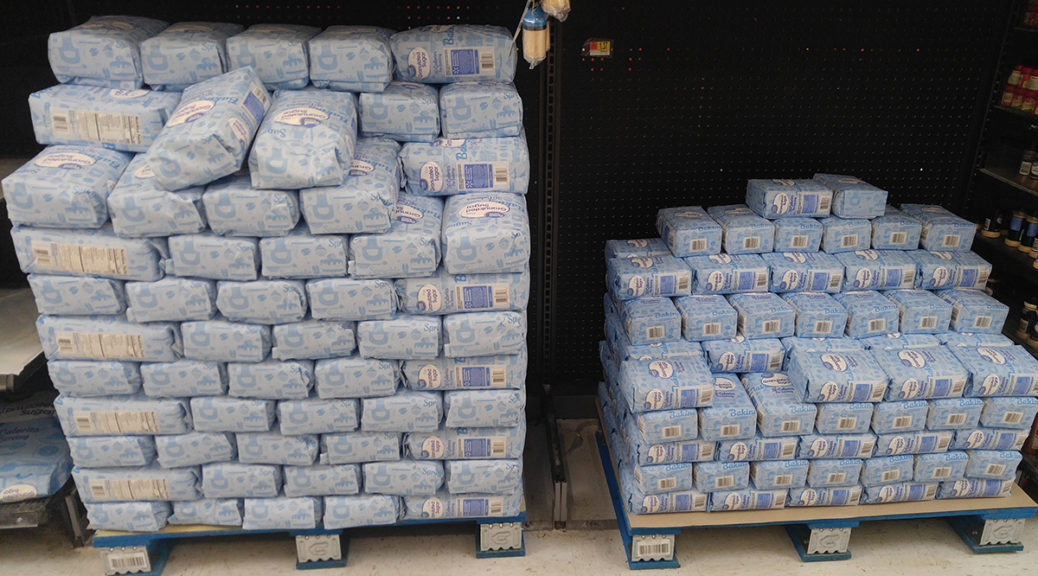
  1. Sugar / processed food / unlimited zero-effort food
  2. Cars / unlimited isolated independent mobility
  3. Television / social media / cheap easy media entertainment
  4. Air conditioning / sedentary indoor lives
  5. Pills / pharmaceuticals
  6. Masks – I hesitate to include this as we imagine they are “temporary.” However, many people like them, because many people are ill.

One Channel Versus Many

“TV is bad.” “TV saps your motivation and rots your brain.” “I don’t watch much TV (therefore I’m better than you).” “TV wastes time.” “Cable wastes money.” “There’s nothing on but trash.”

You’ve heard all that. I’m not going to beat those dead horses.

Cable TV

There is a milestone in the development of television that I believe often goes unnoticed and its societal impact under-estimated. That is cable TV and how cable is different from regular old antenna TV.

I lived in Rio de Janeiro Brazil for six months. Brazil has multiple channels, but for the most part, there is one channel to watch, Globo. The feel there was very different and it felt like lack of cable TV was largely responsible. I say “lack of cable TV” as an American born in 1983, but to them no cable TV – one channel – was normal, nothing to notice.

This is a bit of a rosy picture, but allow me some dramatization. It felt like one big family in Brazil with respect to the TV because everybody saw the same stuff. In Brazil, whether you love the TV darling Flamengo soccer team or not, they are the televised team and everybody watched. Love the current novela or not, everybody watches it at least a little, even in the bars. The news was limited to an hour because otherwise that’s all there would be.

The Good About One Channel

  • Everybody is on the same TV schedule, so it doesn’t get in the way of plans.
  • The news doesn’t have to sensationalize the news to compete with the others, so it is much less emotional and dramatic.
  • Less TV in general, that’s always good.
  • TV was kind of boring, so you didn’t pay much attention to it.
  • I enjoyed the two novelas that ran while I was there, “A Regra do Jogo” and “Velho Chico,” even though I struggled to understand. I was able to get lots of help though because everybody knew what was happening!

The Bad

  • Without competition, one outlet has a monopoly on politics and opinion. Many Brazilians felt like Globo was owned by specific parties and unfairly biased the news.
  • TV was kind of boring. Boring is bad I guess.

The Feeling

I have to admit these differences sound small, but the overall feeling and my perception that it was connected to cable television was really very strong. There was an overall ambiance that the collective attention was outside instead of inside, on others instead of self-focused. Even while actually watching TV, you knew that a good number of homes around were watching the same channel. If you could see in a neighbor’s window, you would see the same channel. If you go outside and run into somebody on the street, you would have just seen the same show. If you go to a bar, the only difference on the TV from your house is that 10 minutes had passed so it is likely later in the same show.

“Winter Storm Harper,” January 2019

I don’t know who started naming winter storms. It was kind of fun having everybody talking about the same thing, but it’s the weather, not the TV. However, instead of the weather – which was underwhelming – we were talking about the TV’s dramatization of the weather. Ridiculous. I heard the grocery stores ran out of food! Hilarious.

So by the way, when did we start naming winter storms?

“When ‘men’ started naming their penises.”

That’s the best answer I heard.
The Car

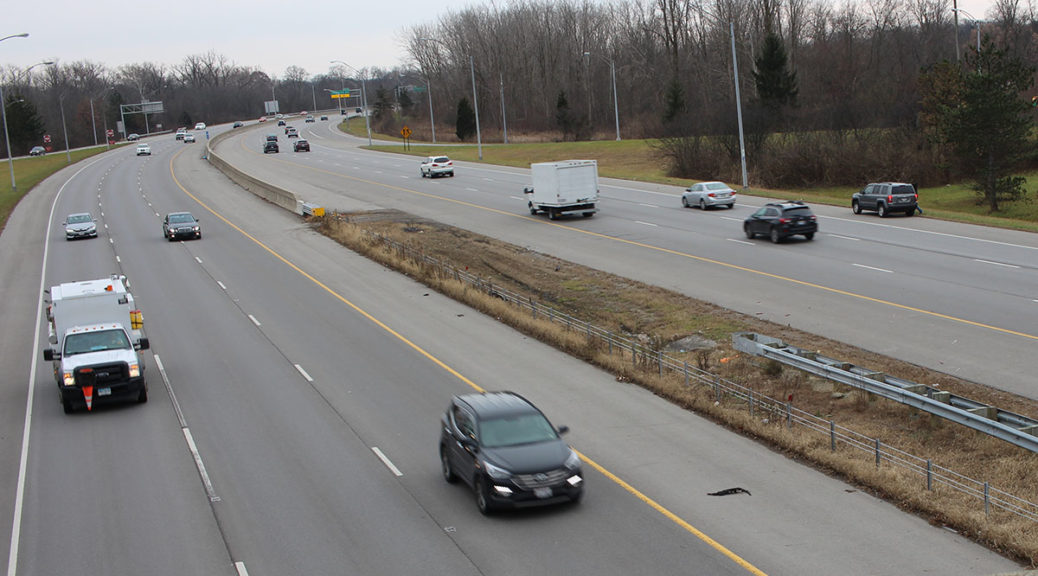
The car. We travel mostly by car in our industrial world. Prior to the car, we traveled by horse, by walking, or not at all. As time passes and the memory of life without cars dies, considering life without cars becomes more and more radical-sounding. However, the car has transformed our lives for better and worse.

Timeline

1769: first steam-powered automobile.

1808: first internal combustion engine automobile, hydrogen-powered.

1870: first gasoline-powered combustion engine automobile.

1885: first production automobile, several copies made by Karl Benz.

1913: first car made on a moving assembly line, the Ford Model T.

The Good

  • Almost infinite mobility within range of a city.
  • Goods travel quickly.
  • Cars are extremely reliable today, inexpensive to own and operate.
  • Can visit friends and family far away easily.

The Bad

  • Enables sedentary lifestyle.
  • Driving alone Isolates from other people.
  • Expensive status symbol.
  • Cars are energy expensive.
  • Driving is statistically very risky, dangerous.
  • Enables us to live far from family and friends.

Keep the Good, Cut the Bad

Consider having one car for the family. At first glance, it appears extremely inconvenient or impossible, but imagine if you do not save the extra money from having just one car, and instead spend the extra money to alleviate the inconveniences. You could possibly:

  • Reduce or eliminate a second job.
  • Taxi / Uber when necessary.
  • Rent a car when you really need it.
  • Pay other parents real money to carpool your kids (while still using your one car to carpool sometimes).
  • Car time becomes family time with one car.
  • Nice bicycles to use for short commuting are cheap compared with a second car.
  • Afford a home closer to where you work and go to school.

Industrial Sugar

Sugar as we know it today is table sugar, which is refined sucrose.

Concentrated sugar includes cane sugar, beet sugar, and high-fructose corn syrup. To start, let’s just look at the overall change that has occurred.

Prior to the Industrial Revolution, sugar came from sugarcane, which grows in tropical climates and is native to southeast Asia. Sugar was expensive outside these regions and always labor-intensive to refine. The Greeks and Romans were aware of sugar, but they did not consider it a food, they considered it a medicine.

Sugar remained a plant by-product with limited refinement until the Industrial Revolution.

Timeline

1493, Christopher Columbus brought sugar to the New World from the Spanish Canary islands. Sugar fueled the African slave trade in the following centuries.

1747, German chemist Andreas Marggraf discovered sucrose in beet root, giving another plant source of sugar in addition to sugarcane.

1768, a steam engine first powered a sugar mill in Jamaica and thus began the industrial mechanization of the refinement of sugar.

Modern Effects

This has brought about cheap sugar, and desserts as sweet as we can desire that are often cheaper than traditional food, and made of sugar rather than sweetened by sugar.

Industrialized sugar refinement has brought about normalization of sugar as a food group. Even if you don’t eat candy, there are many other foods that are sweetened with huge amounts of sugar that we often consider to be normal food. Donuts for example, or soda as a drink to wash down a meal.

Solution

How to keep the good part of the industrial refinement of sugar without the unnatural extreme sweet diet? The answer is to have zero refined sugar inside your house. This rule might seem extreme, but by historical standards, refined sugar is an exception within our diets, a rarity. It is not normal to eat refined sugar regularly. Our bodies are not accustomed to it and it is not healthy.

What’s Normal, We’re Not

We are truly different. Our everyday lives are different. America is more different from every other country than any other 2 countries are from each other. Here is how:

1. Consumer Culture

Goods are so abundant and cheap that producers systematically create demand with advertisements. The result is bright colors everywhere representing the well-organized system professionally designed to make us want stuff. This is so omnipresent in our culture that we don’t realize that it’s there. Our system of advertisement reaches around the globe now, and it stands out everywhere else it appears (McDonald’s, Coke, Viagra, etetera).

2. Cars

We each have one. We drive mostly alone. Carpooling is the exception. We park close when we can, pay to when we can’t. Cars are our status symbol for which we spend 6 months to 2 years up to a lifetime of income.

3. Strong Institutions and Rule Following

We trust our institutions. From the government to our universities even to our franchises and brands like Coca Cola and McDonald’s. They consistently tax us, educate us, make our favorite treats, always convenient parking, meet and exceed minimum service standards, and a free bathroom when you need it.

We trust institutions over people. We will invest our life savings in a faceless stock in the stock market, but are much more hesitant to invest in a local business whose owner we actually know.

We stop for traffic lights with nobody around. We pay our taxes. Corruption surprises us. The roads are straight, fast, aligned at perfect right angles. We drink alcohol in specific regulated places at specific times. Next time you walk down the sidewalk in Las Vegas and think it’s cool that you can carry a beer with you, remember, that’s the only thing really normal about Vegas!

Some of these things seem unrelated, but I don’t think so. We are unique in having a mostly stable government that is older than the population, and we accept its authority. Most of us arrived since the constitution was adopted in 1789. Name another country in the world whose current government is older than its people. Egypt or China? Mexico? No. No. No. Any South American country? No. Some theocracy? No, not like us.

4. Sugar as a Food Group

You notice it in the people immediately upon arrival at a US airport.

5. Security

You probably won’t be robbed at a US airport, bus station, or in most public spaces. America has never been invaded. We expect security. We expect our government to counter threats, and it does.

6. Air Conditioning

We don’t just air condition for some comfort and relief. We refrigerate our spaces. Nowhere else in the world I have ever been can afford to do this, or has buildings air-tight enough for it.

7. Television


For better or worse, our lives are different. We adapt everyday. Adaptation is so ubiquitous we aren’t even aware of it. We are living an experiment from which came many of the greatest improvements in our lives, … but it is an experiment. It has not run its course. The US accounts for just 6.6% of the land area of the world. It has been less than 200 years since the industrial revolution, out of more than 1 million years of human history. As a population, as a culture, we are shocked, adjusting, and changing. We will not live to see the conclusion. The only thing known so far is that we are not normal.

I live in the US, but mostly without the things on that list. It is liberating to at least identify the ways in which we are different. They are the stressors in our lives. To see people shop as a hobby, drive, follow conventions, sip sugar water, follow years’ and decades’ worth of TV series, and refrigerate their living space is like stepping into a hyper-modern future world. You might think I’m crazy, but the reality is: we are.

When I arrived in Germany in December 2008 to backpack for 2 weeks, my first time leaving the country, I was shocked at how un-shocking things were. People were people, living like people. No big deal. I arrived in Afghanistan in January 2011 for a deployment. I remember that of course, but the adjustment there mostly involved the job to do. After a half year there, the real shock was returning home. The colors! The information! Options! What to do?! That returning home shock doesn’t seem to wear off. I have left the country for 6+ months 5 separate times now, to Afghanistan, Japan, and Brazil. Each time I return, I am shocked by how shocking it is to come home.

Over the last year or so, I have spent a lot of time listening to history lectures from the Greeks through today (I recommend The Great Courses, available on Audible, they are awesome). I started with world history for a while, then recently listened to 2 sets of lectures on American history. The shock is the same when learning about history. There is no precedent for America, neither from distant continents, nor from the distant past. America is America. It stands alone.

America is different. America is far from normal. Travel. Travel anywhere in the world, and when you see normal for the first time, remember that you are seeing normal outside the US. Only when you return will you see what is truly remarkable and special. America.

Nielsen Survey

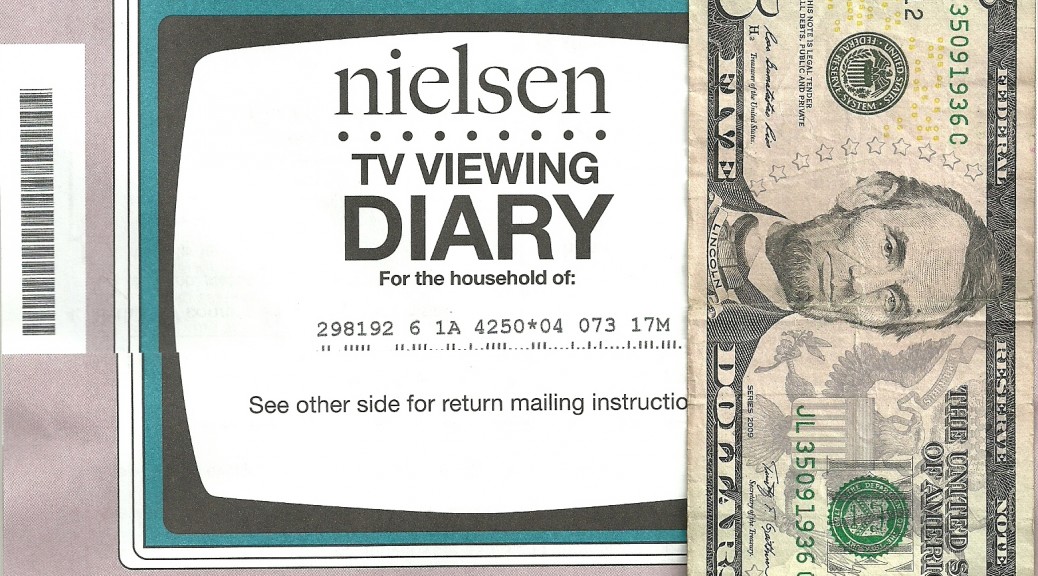
I was recently solicited to participate in a Nielsen household TV survey. They have a unique way of enticing participation. The first envelope has a lot of explanatory material and a request to participate, as well as–without explanation–$5 cash, a single five-dollar bill. I agreed to participate, so after a few weeks they sent me a second envelope with a “TV Viewing Diary” to be filled out in detail for two weeks; and again the cash–this time the envelope contained six five-dollar bills, $30 cash! I spent the fives on groceries, filled out the TV viewing diary (blank because I don’t watch), and took their TV survey. Now, like Pavlov’s dogs, I am expecting a thank you letter with more cash. I can’t wait to hear from Nielsen again!

At the end of the diary, Nielsen leaves space and asks you to “comment on TV in general.” This is my response:

Except for about two years in the middle, I haven’t had TV in my house since 2003 (for two years my roommates had one). At first I felt like I was missing something and like I didn’t know what was going on. After a few months, I no longer missed it and I gathered from conversations at work and with friends what was in the news and what was going on in various shows. After a few years, I started having the opinion that TV actually prevents people from really knowing what’s going on. I hear conversations about current shows and it’s all sensationalized fantasy.  People’s world view from the news is this chaotic, scary place, when really the world, for the most part, is fairly well-off, happy, and stable. When I see TV now, much of it is shocking and some of it is offensive. I do miss sports and ESPN. I watch ESPN
whenever I can! -Nathan Ruffing